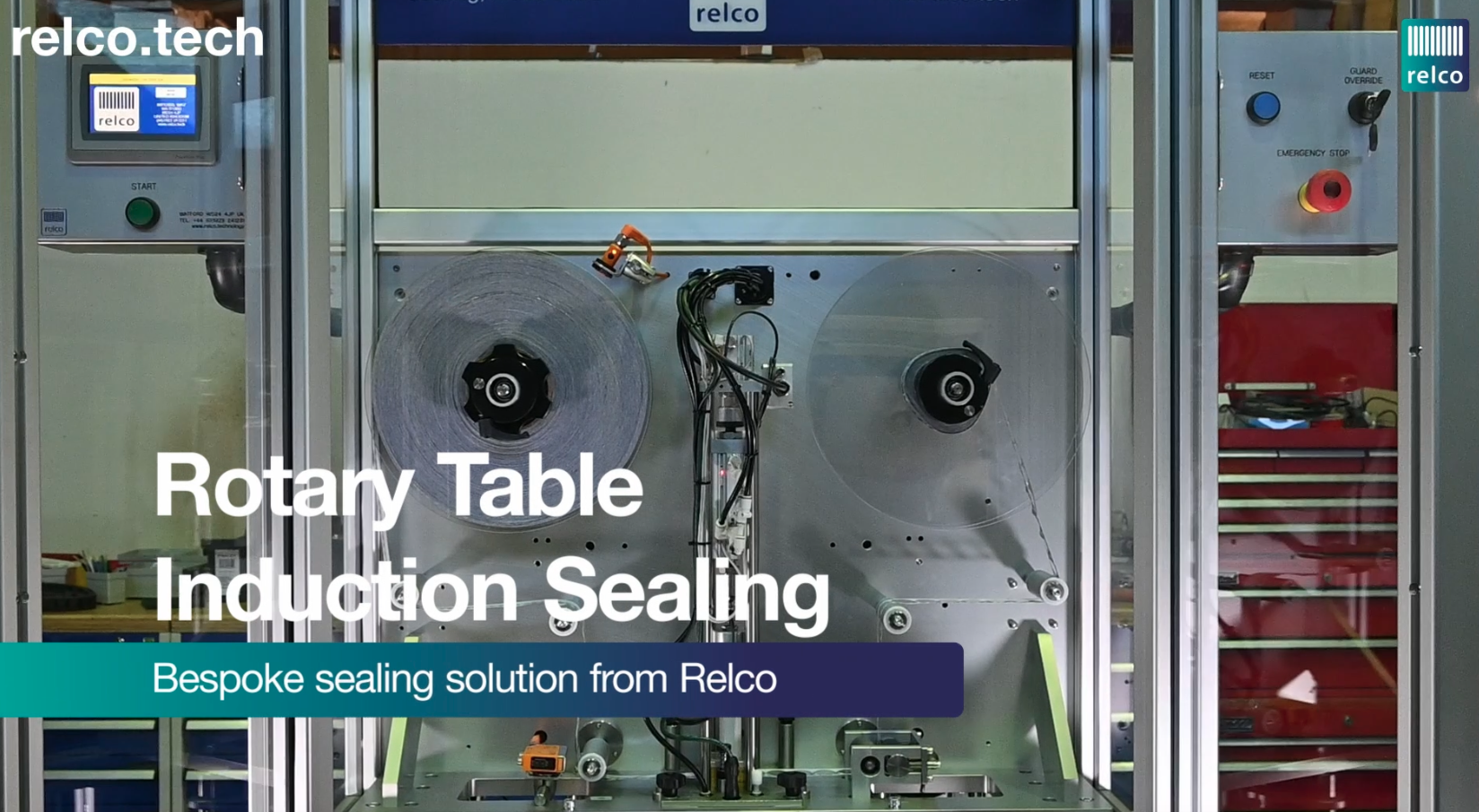
Rapid Production Start with a Standalone Automation Solution
At Relco, we work closely with manufacturers who need reliable sealing automation without the long lead times of a fully bespoke automation line. This case study explains how our FCSI.2 Punch & Seal machine with an integrated rotary table helped a customer move into production quickly while maintaining strict process validation standards.
The project demonstrates how a modified standard platform can deliver high-quality results, faster deployment, and scalable performance.
Project Overview
Machine: Relco FCSI.2 Standalone Punch & Seal System
Configuration: Integrated rotary table with multi-part handling
Objective: Enable rapid production start while ensuring validated sealing performance
Industry Need: Reliable sealing process with force monitoring and weld analysis
Our customer required a flexible system capable of starting production quickly without waiting for a full automation line to be designed and built from scratch. The solution needed to be robust, adaptable, and compliant with validation requirements.
The Customer Challenge: Speed Without Compromising Quality
Many manufacturers face the challenge of balancing speed to market with process reliability. In this case, the customer needed:
- A punch and seal solution that could be deployed rapidly
- Consistent and repeatable sealing performance
- Data visibility for validation and quality control
- Flexibility to adjust parameters during production
Rather than designing a completely new machine, Relco engineered targeted modifications to our proven FCSI.2 platform, significantly reducing lead time while maintaining engineering precision.
Engineering Solution: Modified FCSI.2 Punch & Seal System
The Relco FCSI.2 is designed as a standalone sealing platform that combines precision tooling with adaptable automation features. For this project, we integrated a rotary table to improve throughput and allow efficient multi-part processing.
Key System Features
- Rotary table capable of holding six parts simultaneously
- Integrated force measuring system for process monitoring
- Delta 4 weld analysing system for advanced validation
- Intuitive HMI for parameter control and production data
This configuration allowed the customer to achieve higher productivity while maintaining detailed process insight.
Custom Machine Modifications
Although the system was based on a standard machine, several engineering changes were made to ensure optimal performance with the customer’s specific component and production environment.
Adjusted Machine Frame Height
The overall frame height was modified to match the customer’s production setup and ergonomic requirements. This supported smoother workflow integration and operator usability.
Seal Performance Validation
Relco engineers worked closely with the customer to ensure the part sealed correctly and consistently. Process adjustments and testing ensured reliable results across production cycles.
Six-Position Rotary Table Design
The integrated rotary table was engineered to securely hold multiple parts, improving cycle efficiency without the complexity of a fully automated line.
Advanced Process Monitoring and Validation
Modern manufacturing environments increasingly require detailed data tracking and validation. To meet these needs, the system included two of Relco’s core technologies:
Force Measuring System
The built-in force monitoring capability allows operators to verify sealing pressure in real time. This improves consistency, reduces risk, and supports quality documentation.
Delta 4 Weld Analysing System
The Delta 4 system provides deeper insight into weld performance, helping customers monitor process stability and maintain compliance with internal or industry standards.
Together, these tools enhance traceability and provide confidence in long-term production reliability.
Operator Control Through an Integrated HMI
The machine includes a user-friendly Human-Machine Interface (HMI) designed for both engineers and operators.
The HMI enables users to:
- Adjust production parameters when required
- Monitor force measurement data
- View Delta 4 welding analysis results
- Track performance during operation
This level of control helps customers optimise processes without needing complex reprogramming.
Results: Faster Deployment with Proven Performance
By adapting an existing platform instead of building a fully bespoke system, Relco enabled the customer to achieve a faster production start while still meeting technical requirements.
Project Outcomes
- Reduced development time compared to a full automation line
- Reliable and repeatable sealing process
- Integrated validation and monitoring systems
- Improved throughput through rotary table design
- High customer satisfaction with the final solution
The project highlights how modular engineering approaches can deliver both speed and precision.
Applications for Punch & Seal Rotary Table Systems
Standalone punch and seal machines like the FCSI.2 are commonly used in industries where precision sealing and repeatability are critical, including:
- Medical device manufacturing
- Technical textiles
- Automotive components
- Industrial packaging
- Polymer and film sealing applications
The flexibility of the platform allows modifications to suit a wide range of parts and production requirements.
Why Manufacturers Choose the Relco FCSI.2
Manufacturers often select the FCSI.2 when they need:
- A standalone sealing automation solution
- Faster deployment compared to full automation lines
- Integrated validation and monitoring systems
- Adaptable engineering with proven machine architecture
Relco’s experience in punch and seal technology allows us to deliver practical solutions that support real production environments.
Frequently Asked Questions
What industries use punch and seal machines?
Punch and seal systems are commonly used in medical device manufacturing, automotive components, technical textiles, polymer processing, and industrial packaging where consistent sealing performance is required.
What makes the Relco FCSI.2 different from a full automation line?
The FCSI.2 is a standalone platform designed for faster implementation. It delivers precision sealing and validation features without the extended design time required for fully bespoke automation systems.
Can the FCSI.2 be customised for different parts?
Yes. The machine supports engineering modifications such as tooling changes, frame adjustments, rotary table configurations, and process parameter optimisation.
Does the system support process validation?
Yes. Integrated force monitoring and Delta 4 weld analysis provide data visibility to support validation, quality control, and traceability.
Is the rotary table designed for higher throughput?
The rotary table allows multiple parts to be processed within each cycle, improving efficiency while maintaining precise control of the sealing process.