

February 23, 2026

Life Sciences & Biotechnology
Scroll
OVERVIEW
Secure sealing is essential in life sciences and biotechnology, where sterility, precision and compliance cannot be compromised.
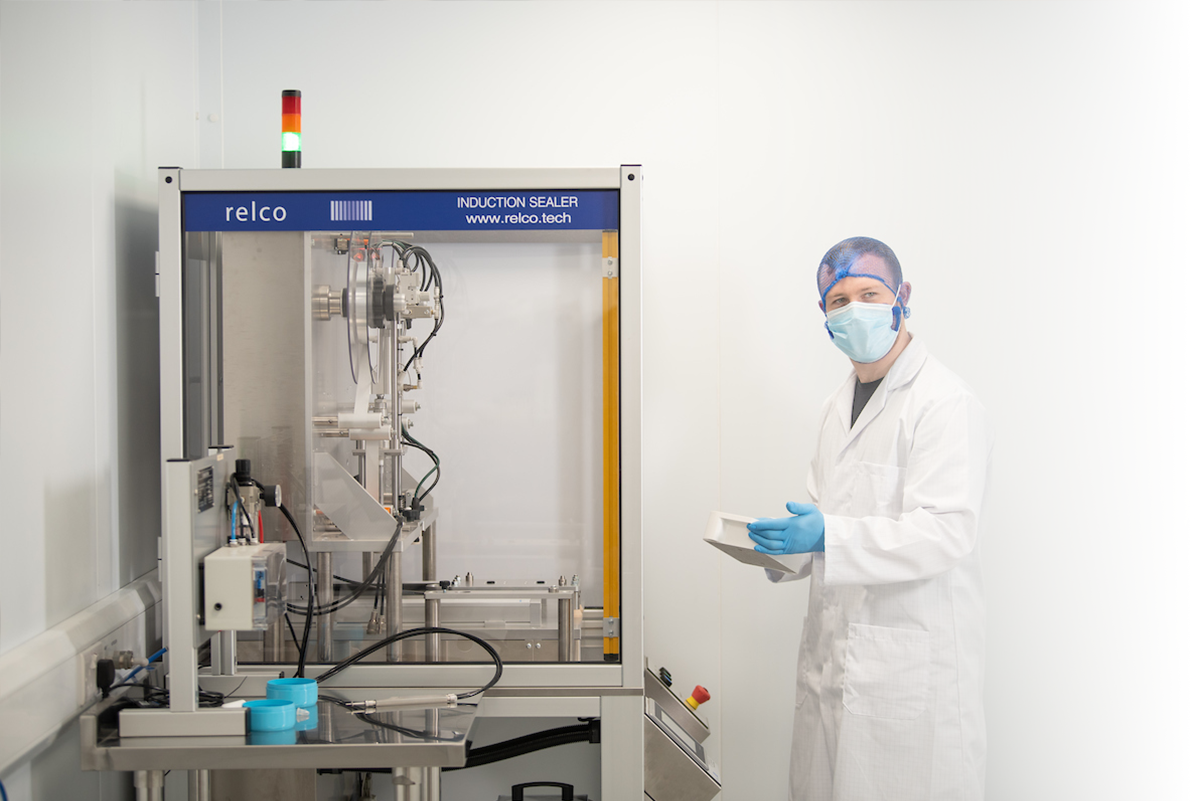
Relco’s automation improves laboratory and production workflows by reducing manual handling and delivering consistent, validated sealing performance. Our advanced induction technology hermetically seals vials, bottles, multi-well plates and specialist containers, protecting sensitive reagents and biological materials from tampering, moisture and contamination.
Capless sealing preserves sterility, prevents leaks and simplifies container design, with seals that can be pierced or peeled back without compromising integrity.

Instant energy, so no waiting for equipment to heat up before starting. As it is more reliable, it provides greater up-time/line availability, so higher productivity and lower maintenance/downtime costs.
Using our cut and place technology, we treat each seal individually. Our system also means we can handle and cut the foil incredibly accurately. Delivering the highest quality seals possible.
Not only does our technology seal millions of products across the world on a daily basis, but we've also developed digital technology that lets us monitor the process and measure quality, seal-to-seal, in real time.
As the head is at ambient temperature we can hold the head down under pressure after the heating cycle has finished to allow the seal to cool/cure whilst still holding the foil in place.
As the heat is generated from within the foil itself by means of the electro-magnetic field we can reach sealing temperature normally within a few hundred milliseconds.







TESTIMONIALS


Helpful information to guide you before getting started.
They are used to securely seal containers holding reagents, enzymes, chemicals and sensitive biological materials, protecting them from contamination and moisture.
A tight seal helps preserve sample integrity, maintain stability and ensure accurate research or diagnostic results.
Equipment and materials can be designed to meet industry regulations, validation processes and material compatibility requirements.