Project Background
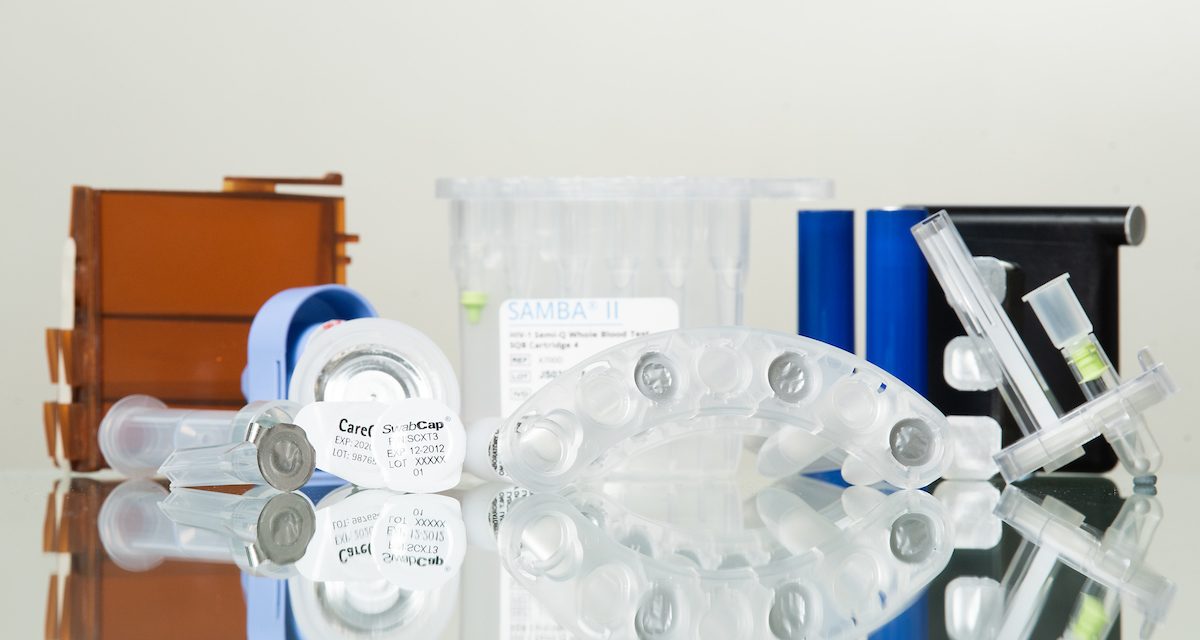
For a medical industry customer developing sealed tubes and cartridges for sensitive reagents and lyophilized pellets, sealing consistency and thermal control were critical requirements.
After experiencing inconsistent results with traditional conduction sealing methods, the customer required a more precise, reliable solution — one that would protect temperature-sensitive components while delivering repeatable seal quality during R&D and validation phases.
The solution was a customised configuration of our MIT semi-automatic capless induction sealing machine, enhanced with a manual linear slide to optimise laboratory workflow.
Understanding the MIT
The MIT is a semi-automatic capless induction sealing machine designed for direct foil application. It is primarily used in:
- Medical and pharmaceutical packaging development
- Process validation
- Engineering trials
- Pilot-scale production
- Pre-automation feasibility studies
Unlike conduction-based systems that apply sustained external heat, induction sealing generates heat directly within the foil liner through controlled electromagnetic energy. This allows precise energy delivery with reduced overall thermal exposure.
The MIT platform provides:
- Full control of sealing parameters (power, time, energy transfer)
- Compatibility with plastic, glass, metal, and ceramic containers
- Support for round and irregular-shaped packaging formats
- A development bridge between R&D and full automation
The Customer Requirement: Precision and Workflow Efficiency
In this specific project, the customer needed:
- Reliable sealing of small tubes and cartridges
- Protection of sensitive reagents and lyophilized pellets
- Consistent seal integrity for validation testing
- Improved handling efficiency during R&D trials
While the core MIT platform already delivered precise induction sealing, we identified an opportunity to enhance operator workflow and multi-sample throughput.
Engineering Enhancement: Integration of a Manual Linear Slide
To support laboratory-scale efficiency, we integrated a manual linear slide into the MIT configuration.
This addition enables operators to:
- Precisely position containers under the induction head
- Maintain consistent alignment
- Seal multiple small vials or cartridges in quick succession
- Improve repeatability across test batches
Importantly, the manual linear slide is a configurable enhancement — not a fixed component of the MIT platform. It demonstrates how the system can be adapted to specific application requirements.
For R&D teams working with multiple samples, parameter adjustments, and validation testing, this modification significantly improves operational flow without increasing system complexity.
Why Induction Sealing Was the Right Choice
In medical reagent and lyophilized product applications, uncontrolled heat exposure can compromise product integrity.
This is where induction sealing provides a clear advantage over traditional conduction methods.
As shared by the customer’s manufacturing leadership:
“I’ve worked extensively with tube and cartridge sealing for reagents and lyophilized pellets and after inconsistent results with traditional conduction methods, have come to rely on Relco’s induction sealing technology for its reliability and superior seal quality. The ability to precisely target the liner melt without sustained heat protects sensitive components and improves performance and also means it is safer to work around. Mark and his team are professional, transparent, and easy to work with, and their systems integrate well into custom automation platforms.â€
Mike Romance
Mfg & Automation Engineering Leader
Technical Advantages Highlighted in This Project
The feedback reinforces several measurable benefits of induction sealing technology in regulated environments:
Targeted Liner Melt Control
Energy is concentrated within the foil liner rather than applied as sustained external heat. This ensures controlled bonding while limiting thermal stress on the product.
Protection of Temperature-Sensitive Components
For reagents and lyophilized pellets, reduced thermal exposure supports product stability and performance.
Improved Safety
Because surrounding components are not subjected to prolonged heating, the system creates a safer working environment for operators.
Automation Compatibility
Even in semi-automatic configurations, the core induction system integrates smoothly into custom automation platforms — supporting long-term scalability.
A Scalable Development Path
The customised MIT configuration serves as a validation and optimisation platform.
By defining sealing parameters and validating packaging integrity during R&D, the customer can:
- Reduce technical and capital investment risk
- Optimise process settings before scale-up
- Transition confidently to a fully automatic induction sealing solution
This structured progression from semi-automatic development to automated production ensures both technical reliability and strategic scalability.
Flexible Engineering for Application-Specific Requirements
This project demonstrates a key principle: the MIT is not a one-size-fits-all machine.
It is a configurable induction sealing platform that can be adapted through:
- Handling modifications such as manual linear slides
- Container-specific adjustments
- Workflow optimisation
- Integration-ready control systems
For medical manufacturers developing new packaging formats or sealing sensitive products, this flexibility is critical.
Conclusion
The customised MIT semi-automatic capless induction sealing machine with integrated manual linear slide illustrates how precision engineering and application-specific adaptation can improve sealing performance in medical R&D environments.
By combining:
- Direct foil induction sealing
- Precise parameter control
- Reduced thermal exposure
- Multi-material compatibility
- Configurable handling enhancements
the MIT provides a reliable, scalable platform for packaging validation and future automation.
For manufacturers working with sensitive reagents, tubes, cartridges, or lyophilized products, controlled induction sealing offers measurable advantages in seal integrity, product protection, and operational safety.
People Also Ask
What is a semi-automatic induction sealing machine?
A semi-automatic induction sealing machine requires operator positioning of containers but automates the sealing process using electromagnetic induction to bond foil liners directly to packaging.
What is capless induction sealing used for?
Capless induction sealing is used for direct foil sealing without caps or liners, commonly in medical, pharmaceutical, and specialty packaging applications.
Why use induction sealing instead of conduction sealing?
Induction sealing provides more precise thermal control by generating heat directly within the foil liner, protecting temperature-sensitive products and improving seal consistency.
Can induction sealing be used for medical packaging?
Yes. Induction sealing is widely used in medical packaging because it provides strong seal integrity, reduces contamination risk, and supports validation requirements.
What is the purpose of adding a manual linear slide to a sealing machine?
A manual linear slide improves container positioning accuracy, operator workflow efficiency, and repeatability when sealing multiple small containers during R&D testing.
What products can be sealed with induction technology?
Induction sealing can be used for medical tubes, reagent containers, pharmaceutical cartridges, laboratory samples, and specialty packaging formats.
Is induction sealing safe for sensitive medical products?
Yes. Induction sealing minimizes prolonged external heat exposure by targeting energy directly into the foil liner, helping protect sensitive chemical and biological materials.
Is the MIT machine suitable for production?
The MIT is primarily designed for R&D, packaging development, and pilot-scale validation before moving to fully automated production systems.
Can induction sealing systems integrate into automation lines?
Yes. Induction sealing systems like the MIT can be adapted for integration into custom automation and packaging production platforms.