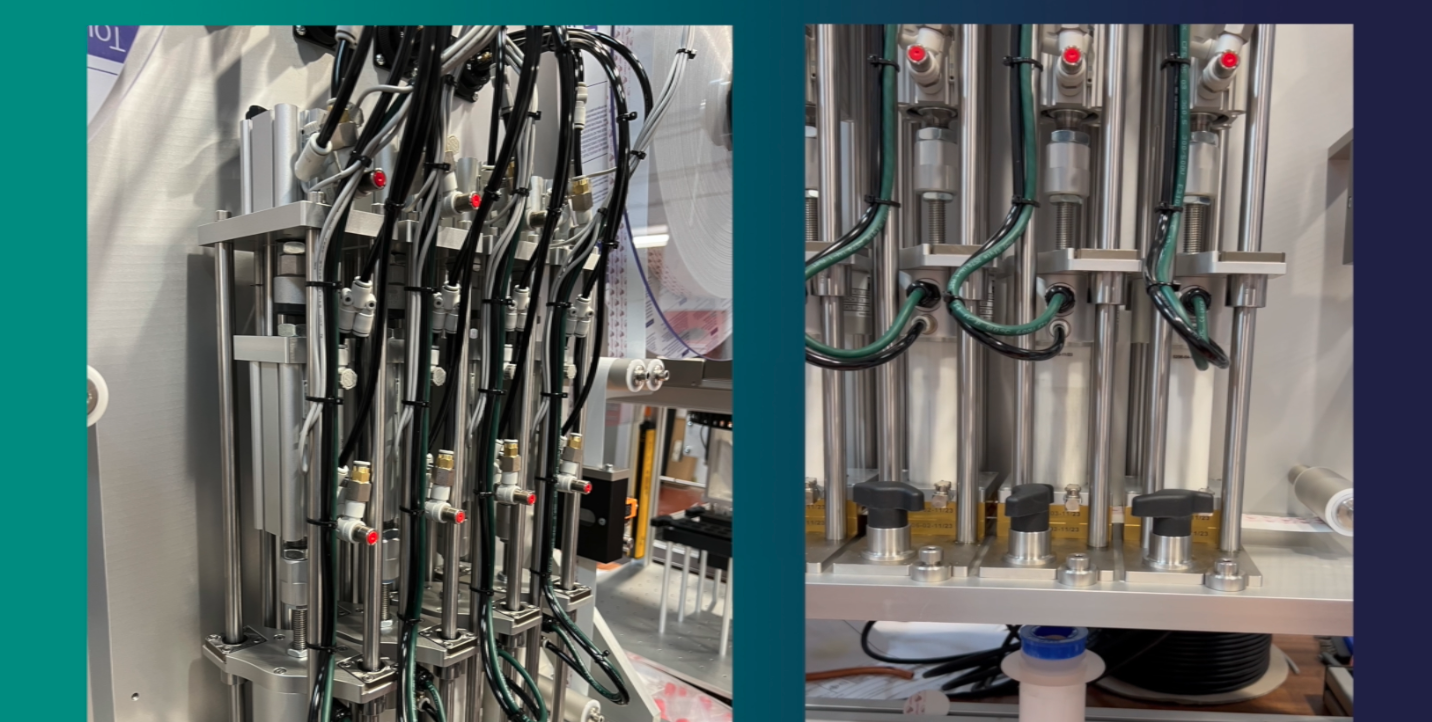
At Relco, we specialize in designing high-precision packaging machinery that combines speed, reliability, and ease of use. Recently, we delivered a state-of-the-art 4-head foil induction sealing system to a customer in Slovakia—a project that showcases our expertise in automating critical packaging processes.
This machine is a self-contained, drop-in solution capable of die-cutting, transferring, and induction sealing foils onto bag-in-box valves with unmatched precision and efficiency.
Key Features and Technical Excellence
- Multi-Part Sealing with Flexibility
The 4-head system can seal four parts simultaneously but also offers flexible operation: it can seal three, two, or even a single part without compromising quality. This flexibility allows manufacturers to adapt to varying production needs, reduce downtime, and optimize energy usage. - Siemens PLC Control for Precision
Each sealing unit is independently controlled via a Siemens PLC, providing precise timing, pressure control, and process monitoring. This ensures consistent, repeatable results and allows operators to easily adjust settings for different foil types or valve sizes. - Maintenance-Friendly Modular Design
Each sealing unit is quickly removable, making routine maintenance or cleaning straightforward. The modular design reduces downtime and extends the operational lifespan of the system—critical for high-volume production facilities. - Smart Foil Handling
The machine features easy foil reel replacement and a built-in sensor to monitor foil levels. This prevents unexpected production stops and allows operators to plan foil replacement efficiently, ensuring uninterrupted production.
Benefits for Manufacturers
Implementing this machine provides several tangible advantages:
- Increased productivity with high-speed multi-part sealing
- Flexible production that adapts to batch size or line changes
- Reduced material waste through precise foil placement
- Minimal downtime thanks to modular press units and easy maintenance
- Simplified operations with smart foil monitoring
Why Choose Our Foil Sealing Solutions
Our team combines decades of experience in packaging machinery engineering with a deep understanding of the bag-in-box industry. This project demonstrates how our solutions:
- Deliver reliable, repeatable results for high-volume operations
- Are user-friendly, reducing training and operational errors
- Incorporate smart monitoring, improving production efficiency
Real-World Deployment
The successful implementation in Slovakia proves that our solutions are ready for real-world industrial applications. Operators highlighted the machine’s flexibility to run fewer heads without losing efficiency, its precision, and minimal maintenance requirements—further validating its design and engineering excellence.
Learn More
If you are exploring ways to upgrade your packaging line or are interested in foil induction sealing for bag-in-box valves, our experts are ready to help. Contact us to discuss your requirements and discover how our high-speed, flexible, and precision-driven machines can enhance your production process.
FAQ
Q1: How many parts can the machine seal at once?
The system has four independent sealing heads. It can seal four, three, two, or just one part at a time, providing maximum flexibility to match production needs.
Q2: What type of control system does it use?
The machine is controlled via a Siemens PLC, allowing precise adjustment of pressure, timing, and sequencing for each individual sealing unit.
Q3: Why is independent head control important?
Independent control enables operators to adjust settings for different foils or batch sizes, reduces material waste, and allows the machine to run efficiently even if one or more units are offline for maintenance.
Q4: How does the machine handle maintenance?
Each sealing head is quickly removable, making cleaning, maintenance, or replacement fast and easy, reducing downtime in high-volume production.
Q5: How is foil supply managed?
The system has easy foil reel replacement and a sensor to monitor remaining foil, ensuring continuous operation and preventing unexpected production stops.